
Chestnut grove
of Villeneuve
Suggestions
- famille
- agriculture
- mobilité
- énergie
- tourisme
- faune
- biodiversité
- vélo
- patrimoine
- randonnée
- produit
- alpage
Cultural and natural heritage
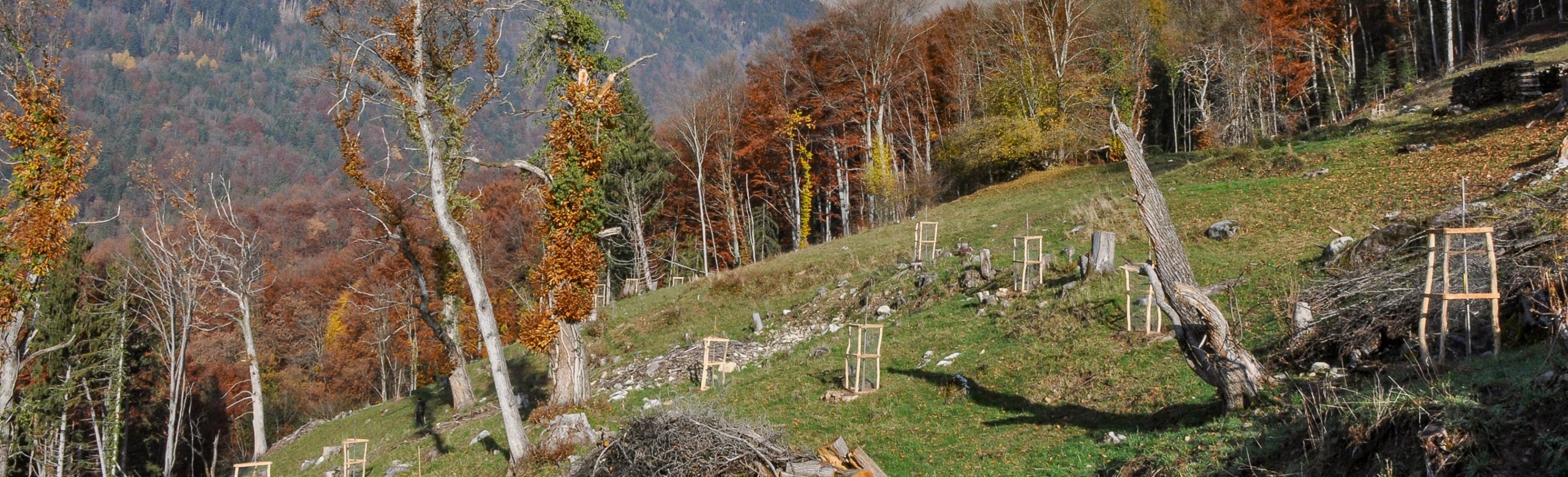
As chestnut trees do not tolerate limestone, they are relatively rare in the region. They grow in limestone-free pockets formed by the Rhône glacier, which deposited alluvial material from the Alps. Chestnut groves were abandoned during the 20th century and gradually recolonised by the forest.
However, chestnut groves are part of our cultural and botanical heritage. These open, structured environments remain an important component of the landscape. They provide habitat for a wide range of animal species, including small mammals, birds and insects that depend on dead wood. Chestnut production helps preserve this heritage while maintaining a traditional silvopastoral culture on forest land.
Restoration of chestnut groves
The restoration of the Montolivet and Chenaux chestnut groves was carried out between 2011 and 2013, under the guidance of the Gruyère Pays-d'Enhaut Regional Nature Park, in collaboration with the Swiss Landscape Fund, the Vaud Cantonal Forest, Wildlife and Nature Service and the Villeneuve municipality. An association of chestnut grove owners has been set up to conserve and improve the general condition of the selves.
This restoration project brings to light a forgotten part of Villeneuve’s communal heritage. It contributes to landscape diversity and to the conservation of biodiversity. By acquiring plots of land through purchase or donation, the municipality aims to make the chestnut grove a place for meeting and exchange.
The revitalised forest is a patchwork of private and communal plots. An association of owners has been established to ensure the maintenance of the chestnut grove. Its tasks include controlling brambles, replacing dead young trees, grafting trees, managing diseases (such as canker) and overseeing grazing.
Chestnut production requires ongoing work by forest owners. The chestnuts belong to them. The owners therefore ask visitors to respect their work and not to collect chestnuts in the grove.
- An area of 24,000 m2 was cleared, involving the cutting and removal of 940m3 of forest trees, while preserving the old chestnut trees.
- The soil was then seeded with grass, and the chestnut groves must be grazed or mown to prevent forest invasion.
- 239 young chestnut trees were planted and protected, and they began to produce fruit.

Chestnut picking
Chestnut production requires work on the part of forest owners. The chestnuts belong to them. The only trees where picking is permitted to the public are those belonging to the municipality of Villeneuve. They are marked with a plaque like this one.
