
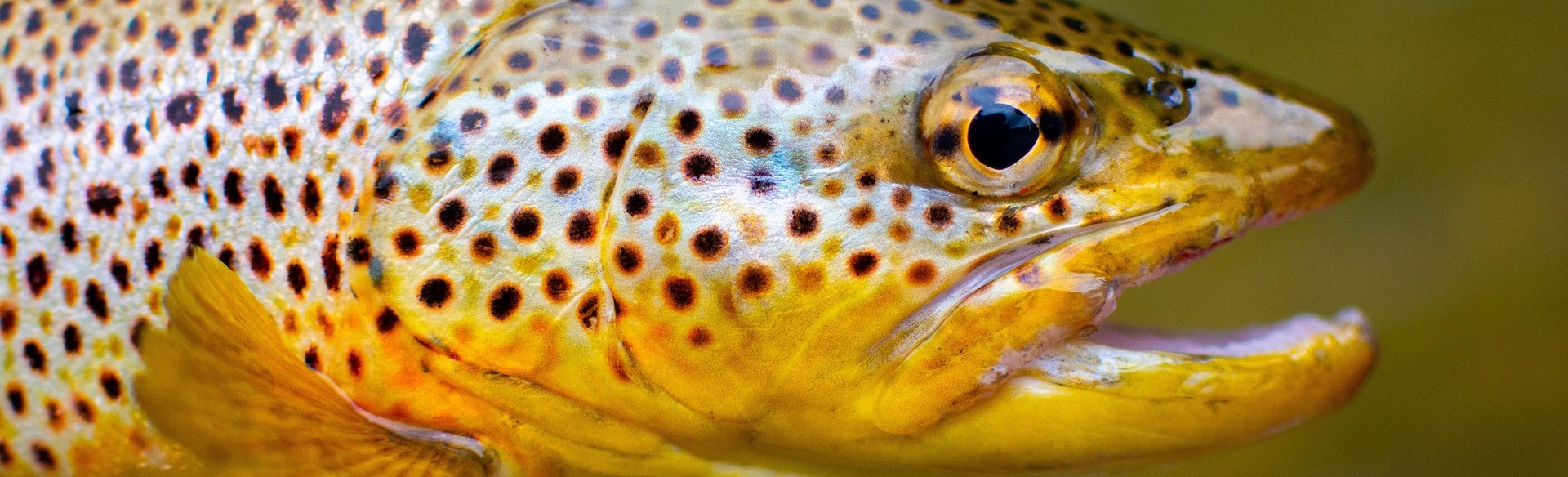
Brown trout
Suggestions
- famille
- agriculture
- mobilité
- énergie
- tourisme
- faune
- biodiversité
- vélo
- patrimoine
- randonnée
- produit
- alpage
Brown trout, guardians of our rivers
Wild brown trout are often confused with farmed trout, yet their way of life and adaptation to natural environments are quite different. Farmed trout, such as those raised at the Neirivue fish farm, grow in controlled conditions for human consumption or fish stocking. Wild brown trout, on the other hand, depend entirely on the quality of rivers and streams to complete their life cycle. More cautious, more mobile and often more colourful, they are valuable indicators of the health of aquatic ecosystems.
At the beginning of winter, brown trout swim upstream in search of gravel beds where they can lay their eggs. After several months of development, the young fish emerge and seek shelter in small, shaded streams that are essential to their survival. These habitats provide cool water, oxygen and protection during periods of extreme heat or flooding.

Brown trout

Rainbow trout at the Neirivue fish farm
Vegetation along rivers also plays a vital role. Trees and shrubs stabilise riverbanks, help prevent water from warming and create suitable habitats for numerous aquatic species. Insects, larvae, molluscs and small fish form an interconnected food web that supports the balance of the entire ecosystem.
For several decades, these environments have faced increasing pressure. Weirs and artificial structures obstruct fish migration, some water intakes alter natural river flows, and concrete riverbanks reduce habitat diversity. River sections that were once rich and dynamic become more uniform, sometimes almost lifeless.
In response to these challenges, the Swiss Fishing Federation, regional fishing associations, fisheries wardens and the Park are working together to restore the ecological quality of rivers and streams. Restoring natural riverbanks, improving habitats, monitoring fish populations and raising public awareness all help create more space for wildlife to thrive.
Protecting brown trout also means investing in the region’s future. Healthy, thriving rivers benefit biodiversity, landscapes, agriculture, recreation and quality of life. Beyond the preservation of this emblematic species lies a broader ambition: to ensure that rivers remain resilient in the face of climate change while continuing to sustain life throughout the region.

Javro Floodplain